New vs Old Tax Regime 2026: Which is Better for You?
Every year between January and March, millions of Indian taxpayers face the same dilemma: should I choose the new tax regime or stick with the old one? With Budget 2026 making the new regime even more attractive, this decision has become critical.

Confused by the slabs?
Don't calculate manually. Use our automated tool to compare your tax under both regimes instantly.
Calculate My Tax LiabilityUnderstanding the Two Tax Regimes
India currently offers taxpayers a choice between two distinct income tax structures, each with its own philosophy and benefits.
Old Tax Regime
Traditional structure focusing on tax-saving investments.
- •Multiple deductions (80C, 80D, HRA).
- •Higher tax rates on lower slabs.
- •Requires documentation proofs.
New Tax Regime (Default)
Simplified structure with lower tax rates.
- •Lower tax rates across slabs.
- •Minimal deductions (Standard Ded. only).
- •Paperless & hassle-free.
Income Tax Slabs 2025-26
Understanding the exact tax slabs is crucial. Here is the breakdown for the New Regime (FY 2025-26).
| Income Slab | Tax Rate | Calculation |
|---|---|---|
| Up to ₹4,00,000 | NIL | No tax |
| ₹4L to ₹8L | 5% | 5% on income > ₹4L |
| ₹8L to ₹12L | 10% | ₹20k + 10% on income > ₹8L |
| ₹12L to ₹16L | 15% | ₹60k + 15% on income > ₹12L |
| ₹16L to ₹20L | 20% | ₹1.2L + 20% on income > ₹16L |
| ₹20L to ₹24L | 25% | ₹2L + 25% on income > ₹20L |
| Above ₹24L | 30% | ₹3L + 30% on income > ₹24L |
Important Benefits (New Regime):
- Standard Deduction: ₹75,000 for salaried.
- Tax Rebate (87A): Income up to ₹12 Lakh is effectively tax-free due to rebate limit adjustments.
- Effectively Tax-Free: Up to ₹12.75 Lakh for salaried individuals.
Deductions in Old Tax Regime
The old regime‘s biggest advantage is the extensive list of deductions available.

Max ₹1.5 Lakh
- EPF &PPF
- ELSS Mutual Funds
- Life Insurance
- Home Loan Principal
Max ₹25k - ₹1L
- Self & Family
- Parents (Senior Citizens get higher limit)
- Preventive Health Checkup
Significant Savings
- HRA (Rent paid)
- Sec 24(b) Interest (Max ₹2L)
- Standard Deduction
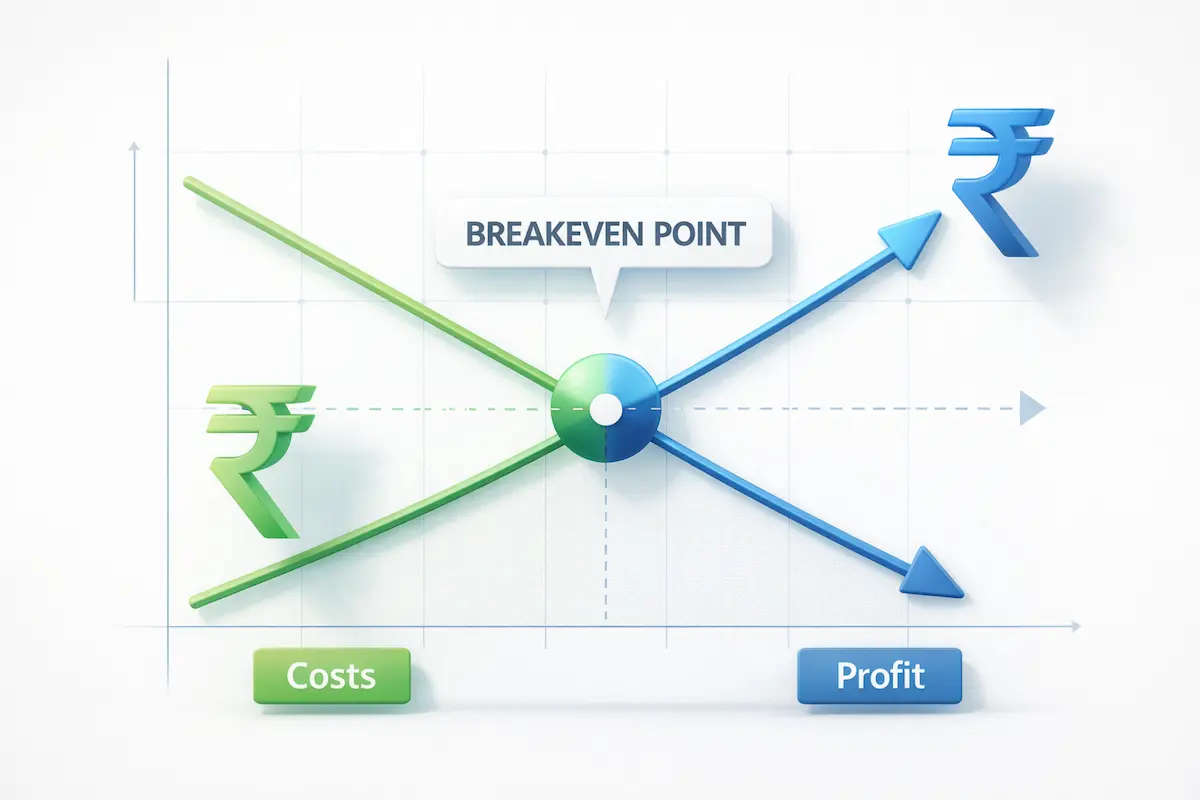
Breakeven Analysis: When to Switch?
The answer depends on your income level and how many deductions you can actually claim.
Profile: Young professionals, single, living with parents.
| Income | Old Tax | New Tax | Winner |
|---|---|---|---|
| ₹8 Lakh | ₹45,000 | NIL | New |
| ₹12 Lakh | ₹1,22,500 | NIL | New |
Verdict: New Regime is clearly better.
Profile: Salaried with home loan, HRA, 80C.
| Income | Deductions | Old Tax | New Tax |
|---|---|---|---|
| ₹12 Lakh | ₹3 Lakh | ₹52,500 | NIL |
| ₹15 Lakh | ₹3 Lakh | ₹1,02,500 | ₹75,000 |
Verdict: Marginal difference. New Regime often wins unless deductions are huge (>₹3.75L).
Real-Life Examples
- Old Regime Tax: ₹38,000
- New Regime Tax: NIL
- Winner: New Regime (Saves ₹38k)
Assuming HRA, Home Loan Interest, and 80C claimed.
- Old Regime Tax: ₹1,29,400
- New Regime Tax: ₹1,45,000
- Winner: Old Regime (Saves ₹15.6k)
How to Switch Regimes
- Default Regime: New Regime is now the default. You must actively opt for Old Regime if you want it.
- For Salaried: Declare choice to employer at start of FY. Can switch annually.
- For Business Income: Can switch to Old Regime once, but moving back to New Regime is a one-time option (lifetime).
Common Mistakes
New regime doesn't force investment. Don't stopsaving for goals (SIPs)just because there's no tax benefit.
Ensure employer deducts TDS based on your chosen regime to avoid large tax payable at filing time.
Conclusion: Make an Informed Choice
There's no universal answer—it depends entirely on your income level, actual deductions, life stage, and financial goals.
- New regime is default; actively choose old if you need it.
- Up to ₹12.75 lakh is effectively tax-free under new regime for salaried.
- Old regime wins at ₹15 lakh+ income if you have substantial loans and investments.
Take control of your tax planning today—the choice you make can save you lakhs over time.