
EMI Calculator Guide 2026: Formula, Prepayment, Tenure & Tax Benefits
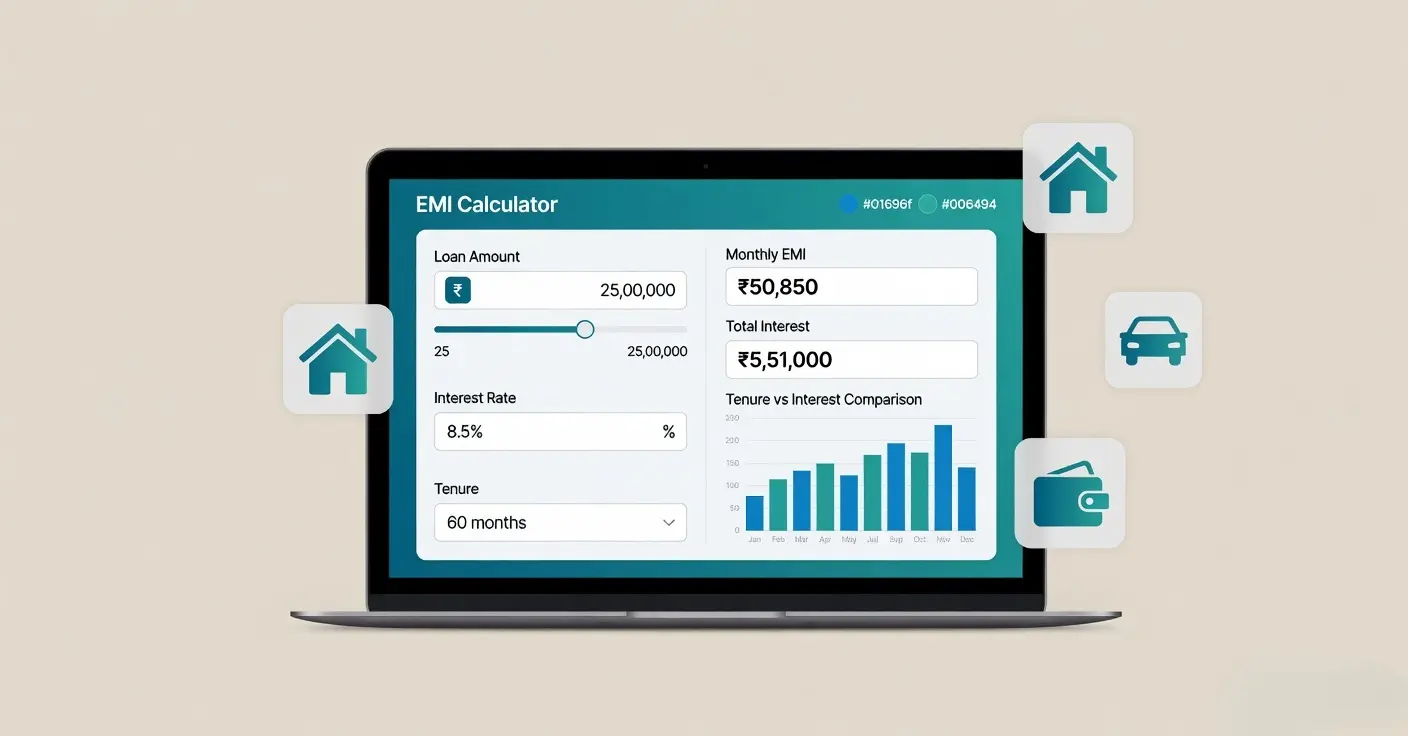
EMI (Equated Monthly Installment) is the fixed monthly amount you pay to repay a loan over a chosen tenure. Whether you are using a home loan EMI calculator, checking a car loan offer, or comparing personal loan costs, understanding how EMI works helps you avoid over-borrowing, reduce interest cost, and choose a better repayment strategy.
What is EMI?
EMI combines two parts: principal repayment and interest. In the early years of a reducing-balance loan, a larger share of the EMI goes toward interest, and later the principal component starts increasing faster.
The amount borrowed from the lender.
The annual percentage cost charged on the outstanding balance.
The total repayment period, usually expressed in months or years.
Processing fees, reset clauses, insurance, and prepayment terms also affect total borrowing cost.
EMI Formula
The standard reducing-balance EMI formula used by lenders is:
- P = loan amount
- R = monthly interest rate = annual rate ÷ 12 ÷ 100
- N = tenure in months
For a ₹40 lakh home loan at 8.5% for 20 years, the EMI is about ₹34,699.
That feels manageable monthly, but total interest still becomes very large over a long tenure, which is why tenure and prepayment planning matter.
EMI by Loan Type
Home loan EMI
| Loan amount | Rate | Tenure | EMI | Total interest |
|---|---|---|---|---|
| ₹50 lakh | 8.5% | 20 years | ₹43,391 | ₹54.14 lakh |
| ₹50 lakh | 9.0% | 20 years | ₹44,986 | ₹57.97 lakh |
Car loan EMI
| Loan amount | Rate | Tenure | EMI | Total interest |
|---|---|---|---|---|
| ₹8 lakh | 9.5% | 5 years | ₹16,744 | ₹2.05 lakh |
| ₹8 lakh | 9.5% | 7 years | ₹12,756 | ₹2.72 lakh |
Personal loan EMI
| Loan amount | Rate | Tenure | EMI | Total interest |
|---|---|---|---|---|
| ₹5 lakh | 12% | 3 years | ₹16,607 | ₹97,852 |
| ₹5 lakh | 18% | 3 years | ₹18,076 | ₹1.51 lakh |
EMI vs Tenure
A longer tenure lowers EMI, but the trade-off is much higher total interest.
| Tenure | Monthly EMI | Total interest | Comment |
|---|---|---|---|
| 10 years | ₹62,137 | ₹24.56 lakh | Fast repayment, lower total cost |
| 15 years | ₹49,147 | ₹38.46 lakh | Balanced option for many borrowers |
| 20 years | ₹43,391 | ₹54.14 lakh | Common but costlier |
| 30 years | ₹38,448 | ₹88.41 lakh | Lowest EMI, highest total interest |
Rate Sensitivity
Even a 0.5% or 1% difference in interest rate can change your long-term cost materially, especially on home loans.
| Rate | EMI | Total interest |
|---|---|---|
| 8.0% | ₹41,822 | ₹50.37 lakh |
| 8.5% | ₹43,391 | ₹54.14 lakh |
| 9.0% | ₹44,986 | ₹57.97 lakh |
Prepayment Strategies
For many borrowers, the best structure is a comfortable initial tenure plus disciplined prepayment rather than choosing the maximum tenure and doing nothing later.
Tax Benefits
- Home loan principal repayment may qualify under Section 80C, subject to the overall limit and applicable conditions.
- Eligible home loan interest may qualify under Section 24(b), subject to prevailing rules.
- Personal loan and car loan EMIs usually do not get the same broad tax treatment as owner-occupied home loans, though specific business-use cases can differ.
How Much EMI Is Safe?
A practical affordability rule is to keep total EMIs below about 40% of monthly take-home income.
Usually comfortable for most households.
Manageable if emergency savings are strong.
Can become risky if income changes or expenses rise.
Common Mistakes
FAQs
Use the EMI calculator before you borrow
EMI planning is not only about affordability today. It is about how much interest you will still be paying years later.
Nitin researches and writes all financial guides on Fincado, cross-checking figures against RBI circulars, official bank disclosures, and the Income Tax Act. Content on this site is independent analysis — not personalized financial advice.
Jun 2026
Source cross-check and periodic QA
Actual outcomes can vary by borrower profile, bank policy, market conditions, and future rule changes. Validate important decisions with a certified professional.
Disclaimer: This article is for educational purposes only. Loan terms, lender policies, tax rules, and interest rates may change. Verify details with your lender or tax advisor before making financial decisions.